

What to Expect in a Laser Hair Removal Session
Laser hair removal offers a convenient way to reduce unwanted hair and simplify your regular grooming routine. Understanding what happens before, during, and after an appointment can help you feel more comfortable and prepare for the best possible results. From the initial consultation to post-treatment care, each step plays an important role in the process. Knowing what to expect from a laser hair removal service can help you make informed decisions about your skin and treatment goals.
Understanding How Laser Hair Removal Works
Laser hair removal uses concentrated light energy to target pigment in hair follicles. The light converts to heat, which damages the follicles and reduces their ability to produce hair. Because hair grows in different stages, multiple treatments are generally necessary to achieve noticeable, lasting hair reduction.
Unlike shaving, which removes hair at the skin's surface, laser treatments target the structures responsible for hair growth. This approach can gradually reduce hair density and thickness in treated areas. Results vary depending on factors such as hair color, skin tone, treatment area, and individual hair-growth patterns.
A laser hair removal service may be suitable for areas such as the legs, underarms, bikini line, and face, depending on the provider's offerings and the individual's needs. During a consultation, a qualified provider can evaluate the treatment area, discuss expectations, and determine whether laser hair removal is an appropriate option.
Preparing for Your Appointment
Proper preparation helps protect your skin and supports a more effective treatment. Before your appointment, your provider will typically give you instructions based on your skin type, the area being treated, and the equipment used. Following these guidelines can help you prepare for your laser hair removal service and reduce the risk of irritation.
Several weeks before treatment, you may need to avoid waxing, plucking, and electrolysis in the treatment area. These methods remove hair from the follicle, making it more difficult for the laser to target the intended structure. Shaving is generally preferred because it leaves the follicle intact while removing visible hair above the skin.
You should also limit sun exposure and avoid tanning before your session. Tanned or sunburned skin can increase the risk of irritation and other side effects. Follow your provider's recommendations about sunscreen and any products that could make your skin more sensitive.
On the day of your appointment, consider the following preparation steps:
- Shave the treatment area according to your provider's instructions, often within the preceding twenty-four hours.
- Arrive at the treatment area with clean skin, free of makeup, deodorant, lotions, and other products, when instructed.
- Tell your provider about any medications you are taking, recent tanning, skin irritation, and any changes in your health that could affect treatment.
- Wear comfortable clothing that allows easy access to the area being treated.
Following these guidelines helps your provider assess your skin and carry out the session as safely as possible. If you are unsure whether a particular product or activity could affect your appointment, ask your provider before treatment.
Reviewing Your Skin and Treatment Goals
Your appointment may begin with a review of your medical history, skin condition, and hair-removal goals. Your provider may ask about medications, previous cosmetic treatments, skin sensitivities, and any history of reactions to light-based procedures. This information helps identify potential risks and determine whether adjustments are necessary.
The provider will also examine the treatment area and discuss the results you can reasonably expect. Laser hair removal typically produces a gradual reduction rather than immediate, permanent removal of every hair. Some hair may grow back finer or lighter, and maintenance sessions may be recommended to manage regrowth.
According to the Cleveland Clinic, most individuals need six to eight laser hair removal sessions, with appointments commonly scheduled six to eight weeks apart. The exact number and timing depend on the treatment area, hair-growth cycle, and individual response.
Experiencing the Treatment Process
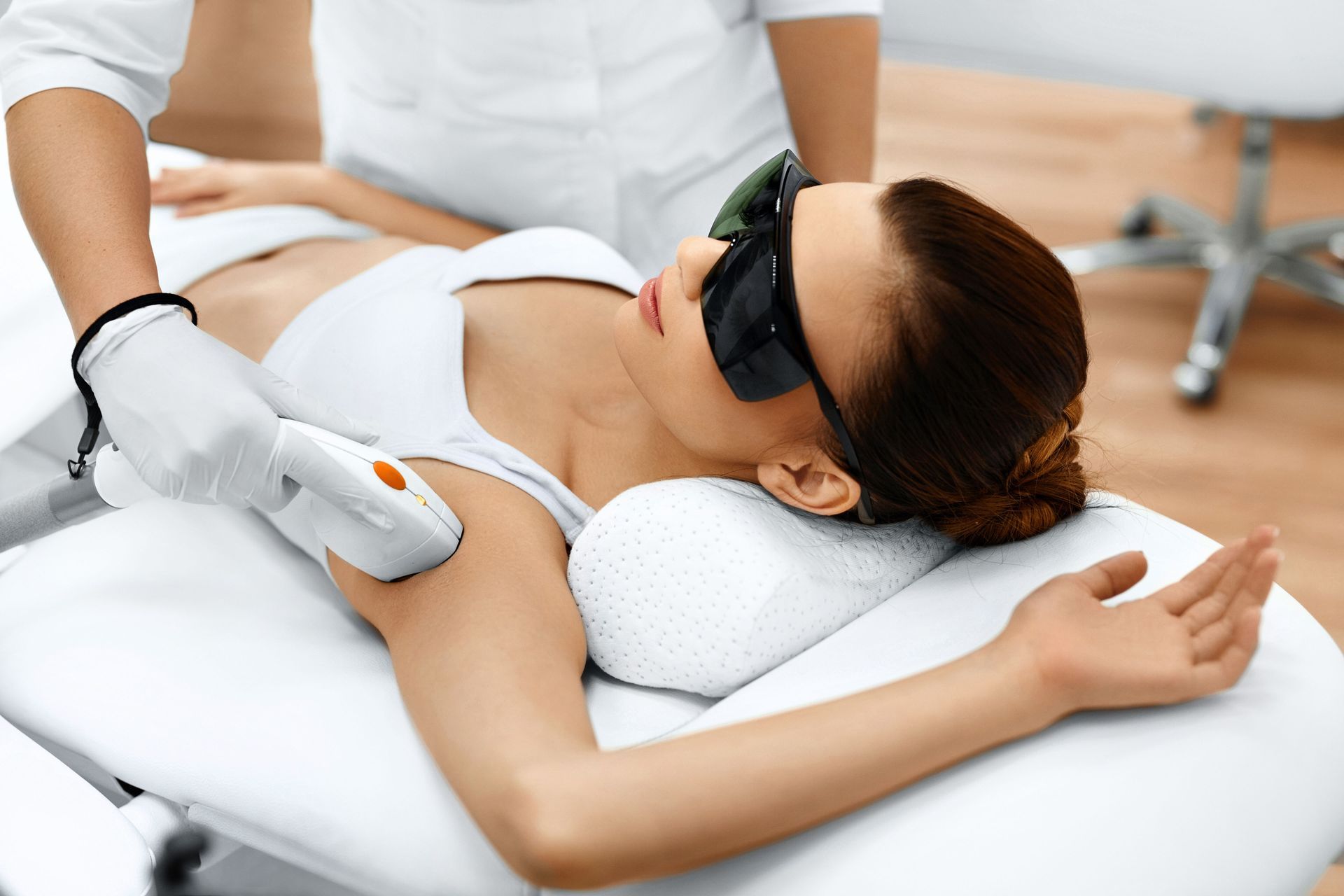
Once the preparation and consultation are complete, your provider will prepare the treatment area. Depending on the procedure and the equipment being used, you may receive protective eyewear to shield your eyes from the laser. The provider may also clean the skin and adjust the device settings based on your skin tone, hair characteristics, and treatment area.
During the session, the laser device delivers controlled pulses of light to the targeted follicles. You may feel a sensation similar to a small snap against the skin or a brief, warm prick. Some devices include cooling features that help reduce discomfort and protect the surrounding skin.
The level of discomfort varies from person to person. Sensitive areas may feel more uncomfortable than larger areas, while some people tolerate treatment with minimal difficulty. If you experience significant pain or unusual discomfort, tell your provider so the settings and approach can be evaluated.
Session length also depends on the size of the treatment area. Smaller areas, such as the upper lip or underarms, may take only a few minutes, while larger areas, such as the legs or back, generally require more time. Your provider can give you an estimate before beginning.
Throughout your laser hair removal service, the provider should monitor your skin's response and follow appropriate safety procedures. Staying relaxed, communicating openly, and following instructions can help make the experience more comfortable.
Managing Your Skin After Treatment
After the session, you may notice temporary redness, mild swelling, or sensitivity around the treated follicles. These reactions are common and generally resemble a mild sunburn. They typically improve within several hours to a couple of days, although recovery varies from person to person.
Your provider may recommend applying a cool compress or using a gentle, fragrance-free moisturizer to soothe the area. Avoid rubbing, scratching, or picking at the skin, especially if you notice small bumps or irritation. These symptoms should gradually subside as your skin recovers.
Protecting your skin from the sun is particularly important after treatment. Use a broad-spectrum sunscreen with an SPF of 30 or higher on exposed areas, and follow your provider's recommendations about sun exposure.
Tracking Progress Between Sessions
Laser hair removal works gradually because the laser is most effective on hair in certain growth stages. Not every follicle is in the same stage at the same time, which is why a single appointment generally cannot effectively treat all unwanted hair.
In the days and weeks following treatment, some hairs may appear to grow before they shed naturally. This process does not necessarily mean the treatment was unsuccessful. Avoid waxing or plucking between appointments, as these methods can interfere with future sessions. Shaving is generally acceptable when your provider confirms that your skin has recovered.
Consistency with your recommended schedule is important. Spacing appointments appropriately allows the provider to target additional hairs as they enter a suitable growth stage. Depending on your response, you may notice that hair becomes finer, grows more slowly, or appears less dense over time.
A laser hair removal service can provide long-term hair reduction, but individual results differ. Hormonal changes, hair characteristics, and other factors may influence regrowth. Some people benefit from occasional maintenance treatments after completing their initial series.
Making Your Next Appointment Count
Your experience with a laser hair removal service can improve when you arrive prepared, follow aftercare instructions, and maintain open communication with your provider. Before each appointment, review any preparation guidelines and report changes in your skin condition, medications, or sun exposure. These details help your provider determine whether it is appropriate to proceed.
It is also important to evaluate progress over several sessions rather than judging results immediately after one treatment. Hair reduction develops over time, and different areas of the body may respond at different rates. Following your recommended schedule gives your provider a better opportunity to address hair growth across multiple cycles.
Achieving Smoother Skin With Confidence
Knowing what to expect during a laser hair removal session can help you prepare for treatment, understand the sensations involved, and care for your skin afterward. Although results take time and multiple appointments are usually necessary, a consistent treatment plan can gradually reduce unwanted hair and simplify your grooming routine. For personalized guidance and to learn more about your options, contact Skin by Shontell to discuss your laser hair removal service and determine the next steps toward your skin-care goals.



Share On: